
The first week of daycare comes with a long list of things to send, and almost every infant room has the same rule at the top: every bottle must be labelled. It sounds simple until you’re standing at the counter at 6:45 a.m. with a marker that has already worn off yesterday’s bottle. Here’s how to label baby bottles for daycare so the label lasts, the educators can read it at a glance, and your baby always gets the right bottle.
Why daycares are strict about bottle labels
An infant room might prepare a dozen bottles before lunch, and many families use the same popular bottle brands. Without a clear name, two identical bottles are impossible to tell apart. Educators also rotate through shifts, so the person feeding your baby in the afternoon may not be the one who took the bag at drop-off. A label means nobody has to guess.
Many daycares also ask for more than a name. Depending on the centre, you may be asked to include:
- Your child’s full name (first and last, so two Emmas don’t get mixed up)
- The date the bottle was prepared
- What’s inside, such as formula or breast milk
- Any allergy your baby has
Ask your daycare for its labelling policy before the first day. Requirements vary between centres, and following them exactly makes drop-off smoother for everyone.
The two-label system that works
The easiest approach uses two kinds of labels on each bottle:
1. A permanent name label
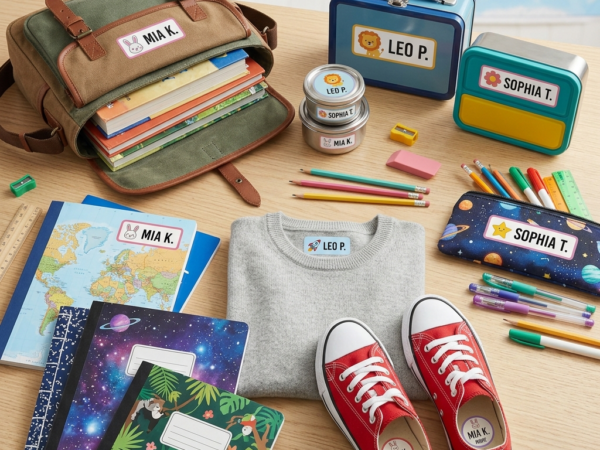
This stays on the bottle for months. Choose a small waterproof label that fits the curve of the bottle, like mini polka dot labels or mini rectangle labels. BunnyTagz waterproof labels are dishwasher-safe and BPA-free, so they stay readable through daily washing.
2. A write-on label for details that change
Dates and contents change every day, so a permanent label isn’t the place for them. Write-on labels give you a space to add the date or a short note, and they wipe clean so you can reuse them.
Where to put the label
Placement matters as much as the label itself.
- On the bottle body, not the cap or nipple. Caps, nipples and rings get separated during washing and end up on other bottles.
- On a smooth, flat area. Avoid ridges, measurement markings you need to read, and the very bottom edge that bumps the counter.
- In the same spot on every bottle. Educators learn where to look, and it’s quicker for you too.
How to apply bottle labels so they stay on
- Wash and fully dry the bottle. Labels don’t bond well to damp or greasy plastic.
- Peel the label and place it without touching the sticky side more than you need to.
- Press firmly from the centre out to push out air bubbles.
- Wait about a day before the first wash so the adhesive can set.
Don’t forget the rest of the feeding kit
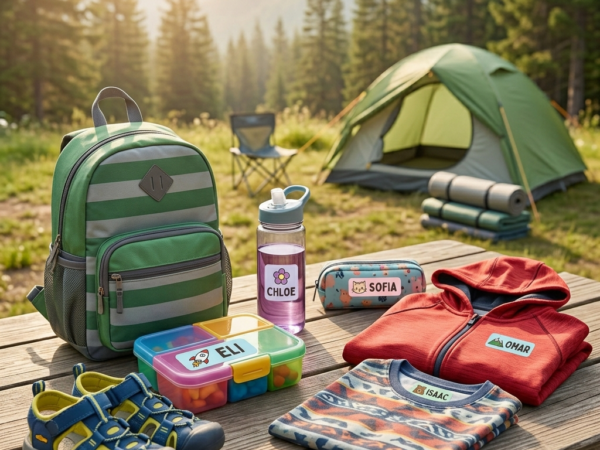
Bottles aren’t the only things that travel back and forth. Label sippy cups, their lids, formula containers, snack cups, bibs and the insulated bottle bag. If your baby has a food allergy, an allergy alert label on the bottle bag makes it visible to every educator, even a supply staff member who’s never met your child.
Labelling breast milk for daycare
Breast milk usually comes with extra rules about dates, storage and how long it can be kept. Your daycare will have its own policy, often based on public health guidance in your province. Use a name label on every bottle, add the date with a write-on label, and follow the centre’s instructions for storage exactly. When in doubt, ask the infant room lead.
What about permanent marker?
Marker works in a pinch, but it fades quickly in the dishwasher and smudges on wet bottles. Masking tape peels off in hot water and leaves residue. Proper waterproof labels cost less over a year than replacing the bottles that go missing.
A quick daycare bottle checklist
- Name label on every bottle body
- Write-on label for the date or contents, if your daycare asks
- Labels on sippy cups, lids and formula containers
- Allergy label on the bottle bag, if needed
- Bottle bag labelled on the outside
Frequently asked questions
Do daycare bottle labels need a date?
Many daycares ask for the date, especially for breast milk. A write-on label is the easiest way to add it each day while keeping a permanent name label on the bottle.
Can bottle labels go in the dishwasher?
BunnyTagz waterproof name labels are dishwasher-safe and BPA-free. Let them set for about a day after applying, before the first wash.
Should I label the bottle or the bottle bag?
Both. The bottle needs its own label because it gets separated from the bag in the fridge and at feeding time. Label the bag too, so it’s easy to grab at pickup.
How many bottle labels do I need?
Count every bottle, sippy cup and container that goes to daycare, then add a few spares for replacements. Most families need more than they expect once lids and snack cups are included.
Make it one order
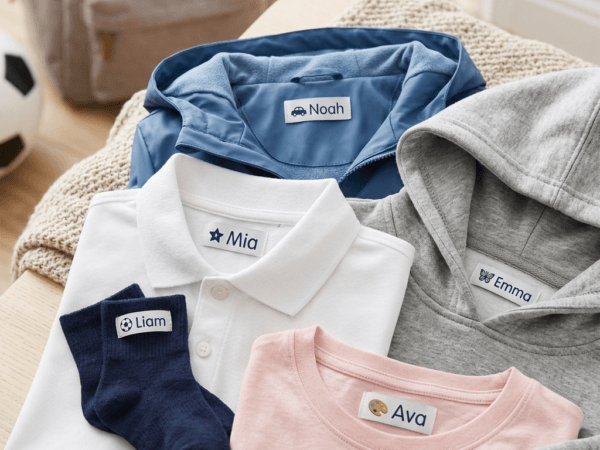
Our baby bottle labels for daycare page brings together everything you need for the feeding kit. If you’re getting the whole daycare bag ready, the Preschool & Daycare Name Labels Combo Pack adds clothing and shoe labels too. Every BunnyTagz order ships free across Canada, so you can have everything labelled before the first day.
Leave a Reply