

You have done everything right.
The school bag is packed. The lunchbox is ready. The uniform is laid out the night before. You have visited the school twice, practiced the morning routine, and even driven the route at school drop-off time to check for traffic.
And then Monday happens.
Because no matter how prepared you are, the first week of school has a way of humbling every single parent. Things go wrong. Things get lost. Things get forgotten. Children cry in places you did not expect and hold it together in places you assumed they would fall apart.
This is completely normal—all of it.
At BunnyTagz, we have heard hundreds of first-week stories from Canadian parents. The funny ones, the stressful ones, the ones that made everyone cry, including the adults. So consider this your honest, no-judgment guide to the ten things that are almost certainly going to happen—and how to handle each one without losing your mind.
1. The Water Bottle Will Go Missing
Not might. Will.
Within the first three days, the water bottle will either be left in the classroom, forgotten on the lunch bench, or quietly claimed by another child who genuinely believed it was theirs because all the water bottles look the same.
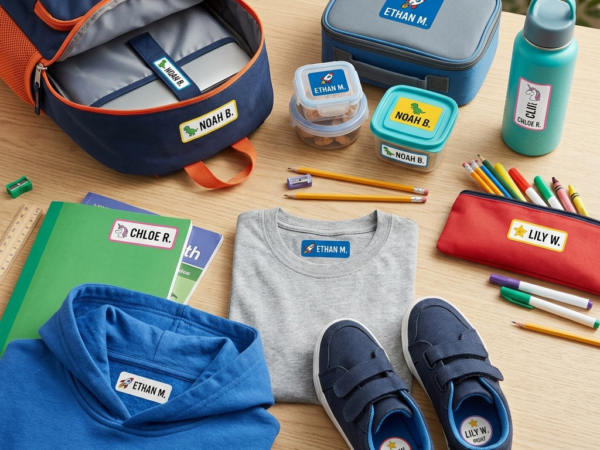
How to handle it: Put a BunnyTagz name sticker on the water bottle before day one. A bright, personalized, waterproof sticker with your child’s name means the bottle can find its way home even without your child remembering to carry it. Teachers notice labeled items. Kids notice labeled items. Unlabelled ones disappear into the lost and found and stay there.
2. They Will Wear the Wrong Shoes to School
You laid out the correct shoes. You pointed at the correct shoes. You said the words the correct shoes at least four times. They will still show up at school in their weekend sneakers, their rain boots, or one shoe from two completely different pairs.
How to handle it: Keep a spare pair of acceptable shoes in the school bag for the first two weeks. And put a name sticker inside every pair of shoes your child owns so that when the shoe situation inevitably becomes a classroom mystery, the answer is right there inside the heel.
3. The Lunchbox Will Come Home Empty But Uneaten
You packed a carefully balanced lunch: sandwich, fruit, a little treat, and a note. Your child will come home having eaten only the treat and possibly one bite of the sandwich. The rest will be in the lunchbox, slightly warm, looking sad.
How to handle it: First week lunches should be simple, familiar, and easy to open independently—no complicated containers, no foods that require effort. And label the lunchbox clearly — because in a room full of identical lunchboxes, a child who cannot spot theirs quickly will spend their entire lunch break looking instead of eating.
4. Someone Will Cry at Drop Off — And It Might Be You
The separation anxiety of the first week is real, and it hits differently than anyone warns you about. Some children cry immediately. Some hold it together magnificently, only to fall apart on day three when the novelty wears off. Some parents make it all the way back to the car before the tears start.
How to handle it: Keep the goodbye short, warm, and consistent. A long, drawn-out farewell makes it harder for everyone. Say your goodbye, mean it, and go. Teachers are extraordinarily experienced at what happens in the two minutes after you leave — and it is almost always fine, much faster than you expect.
5. The Jacket Will Not Come Home
The jacket will be taken off at recess because it is warm outside. It will be placed on a bench, a hook, or the ground. It will not make it back to the classroom. It will live in the lost and found for three days before anyone connects it to your child.
How to handle it: Put a name sticker inside every jacket your child owns before the first day. Inside the collar, it is clearly visible. A labeled jacket in a lost and found comes home. An unlabelled one often does not. This is one of the simplest wins available to any school parent, and it takes about thirty seconds.
6. They Will Come Home Exhausted and Completely Unreasonable
The first week of school is genuinely overwhelming for children—new environment, new people, new rules, new routines, holding it together all day. By the time they reach you at pickup, the emotional tank is empty.
How to handle it: Do not schedule anything for after school in the first week. No errands, no activities, no big conversations about how the day went. Snack first. Quiet time second. Questions later, if at all. The debrief can wait. The child in front of you just ran an emotional marathon and needs to do absolutely nothing for a while.
7. Something Important Will Be Forgotten on Day One
The library bag. The permission form. The specific pencil case that the teacher mentioned in the welcome letter. Something will be left behind on the very first day despite every effort to prevent it.
How to handle it: Let it go. Genuinely. One forgotten item on day one is not a sign of things to come. Teachers in the first week are expecting some chaos and are far more flexible than the school supply list might suggest. Take a breath, add it to tomorrow’s bag tonight, and move on.
8. The Wrong Child Will Come Home With Your Child’s Belongings
In a classroom full of children with identical navy jumpers and the same brand of lunchbox, mix-ups are inevitable. Another child will take your child’s jumper home. Your child will come home with someone else’s pencil case. Nobody will remember how this happened.
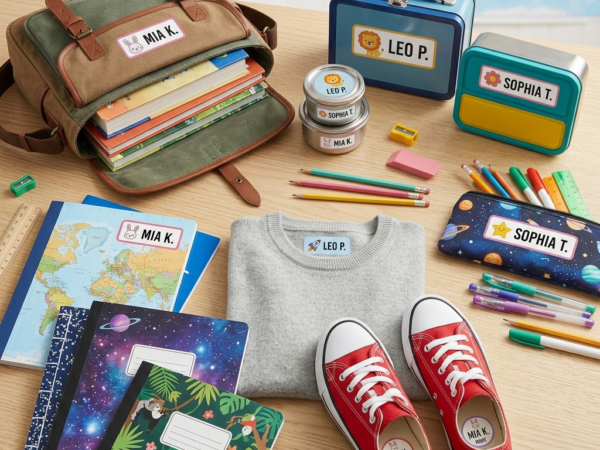
How to handle it: Name stickers on everything. Every single item. Jumper, lunchbox, pencil case, drink bottle, spare socks, everything. At BunnyTagz, we make stickers in a range of sizes specifically because different items need different labels — a pencil case needs a different sticker than a water bottle. When everything is clearly named, mix-ups resolve themselves quickly because the evidence is right there.
9. Your Child Will Tell You Nothing About Their Day
You will pick them up buzzing with questions. How was it? Did you make friends? What did you do at lunch? Who did you sit next to?
They will say fine and ask for a snack.
How to handle it: Stop asking direct questions and start asking specific, small ones instead. What made you laugh today? Was lunch noisy or quiet? What was the weirdest thing that happened? Specific questions get answers. General questions get fine. Also, the best conversations often happen at bedtime when the day has had time to settle — so do not give up on the debrief, change when you have it.
10. You Will Wonder If You Have Prepared Them Enough
This one is less about your child and more about you. Somewhere in the first week, probably around day two or three, you will lie awake wondering if you have done enough to set them up. If they are okay. Suppose they are finding their people. If the lunchbox situation is worse than they are letting on.
How to handle it: You have prepared them enough. The fact that you are lying awake, wondering about the lunchbox situation, is proof of that. Children are remarkably adaptable — far more than parents tend to credit them for. They will find their footing. They will figure out the water bottle. They will eventually eat the sandwich.
And next week will be easier. And the week after that, easier still.
One Last Thing Before Monday Morning
The first week of school is chaotic for almost every family. It does not mean you are doing it wrong. It means you are doing it, which is the only way through.
Label the things. Keep the goodbyes short. Pack simple lunches. Manage your own expectations as generously as you manage your child’s.
And if the water bottle goes missing on day one — which it might — a BunnyTagz name sticker on the replacement one will make sure it finds its way home.

Leave a Reply