

Every parent has had this moment.
You buy your child a brand-new water bottle. A good one. The kind that keeps drinks cold for hours and survives being dropped on concrete. You are quietly proud of this purchase. It lasts exactly eleven school days before it disappears somewhere between the classroom and the school bus and is never seen again.
You ask your child where it is. They shrug. Genuinely unbothered.
And you stand there wondering — at what point does a child actually start caring about their things? At what age does responsibility kick in? Is it something that happens on its own, or is it something parents have to build actively?
We get asked versions of this question a lot at BunnyTagz. Parents come to us because they are tired of replacing lost water bottles and lunchboxes. They buy our name stickers, hoping it will help. And it does —, but the sticker is really just the beginning of a much bigger conversation about how children actually learn to take ownership of their belongings.
So let us talk about that honestly.
The Truth About Kids and Responsibility
Here is the first thing worth saying: children are not naturally irresponsible. They are naturally focused on whatever is most interesting to them in the present moment. A seven-year-old who leaves their jacket on the playground is not being careless on purpose. There are seven. Their brains aren’t yet wired to track belongings the way an adult brain is.
The prefrontal cortex — the part of the brain responsible for planning, organization, and thinking ahead — does not fully develop until the mid-twenties. Which means expecting a five-year-old to automatically keep track of their things the way you do is genuinely unrealistic.
But here is what is also true: responsibility is a skill. And like every skill, it can be taught, practiced, and built gradually over time — starting much earlier than most parents realize.
The key is knowing what to expect at each age, and giving children the right tools and structures to practice with.
Ages 2 to 3 — Planting the Very First Seeds
Toddlers cannot be responsible for their belongings in any meaningful sense. They are still figuring out that objects exist when they cannot see them.
But this is actually the perfect age to start building the foundation, not through rules or expectations, but through simple, consistent routines.
Put their shoes in the same spot every single day. Put their bag on the same hook. Give them a cup that is clearly, visibly theirs — their color, their sticker, their name. Even before they can read, a toddler can recognize their own name sticker and understand that the bottle with that sticker is theirs.
At BunnyTagz, some of the most enthusiastic responses we get are from parents of two- and three-year-olds who say their child absolutely loves seeing their name on their things. That pride — that moment of this is mine — is the very earliest version of ownership. And ownership is what eventually grows into responsibility.
Ages 4 to 5 — Building the Habit Loop
Preschool age is when simple habits start to stick. Children this age thrive on routine and repetition. They feel genuinely proud when they complete a task independently.
This is the age to start giving small, clear responsibilities and putting their own bag by the door. They carry their own lunchbox to school. Putting their water bottle in their bag before they leave.
Keep it simple. Keep it the same every day. And make the physical objects as easy to manage as possible. A lunchbox with a name sticker they recognize. A bag with their name clearly visible. A water bottle that they can identify at a glance from across a classroom.
When belongings are clearly labeled and personally identifiable, children this age are far more likely to notice them, claim them, and bring them home. We hear this from BunnyTagz parents constantly — a named item comes home. An unnamed one does not. It really is that straightforward at this age.
Ages 6 to 7 — Real Responsibility Starts Here
This is the age when children begin to develop a genuine awareness of their surroundings. They notice when things are missing. They start to feel a mild frustration at not being able to find what they need.
This is the right time to start introducing real accountability — gently, without shame, but clearly. If the water bottle does not come home, they do not get a replacement immediately. They live with the natural consequence for a day. Not as punishment, but as a lesson that things do not replace themselves.
At this age, children can also start doing a basic end-of-day check. Lunchbox in a bag. Jacket on. Water bottle in hand. These three things, checked consistently, become automatic within a few weeks.
The name sticker earns its keep here in a very practical way. A six-year-old who spots their name on a bottle left on a classroom bench will pick it up. Without that identification, they walk past it. The sticker removes the ambiguity and gives the child a clear, simple reason to claim what is theirs.
Ages 8 to 10 — Growing Independence
By this age, children are ready to take genuine ownership of their school belongings. Packing their own bag the night before. Being responsible for remembering what they need each day. Knowing where their things are without being asked.
Parents often feel the urge to keep managing these things because it is faster and easier. Resist that urge. A child who packs their own bag makes mistakes — and learns from them in a way that a parent packing the bag for them never allows.
This is also the age where personalized belongings pay off differently. A child who has grown up seeing their name on their things, who has always known which bottle is theirs and which bag is theirs, has already spent years practicing a quiet form of ownership. By eight or nine, it is simply second nature to keep track of what belongs to them.
What Actually Helps at Every Age
Across every stage, a few things consistently make the biggest difference.
Routine over reminders. A consistent place for everything beats ten daily reminders every single time. Same hook. Same spot. Same routine.
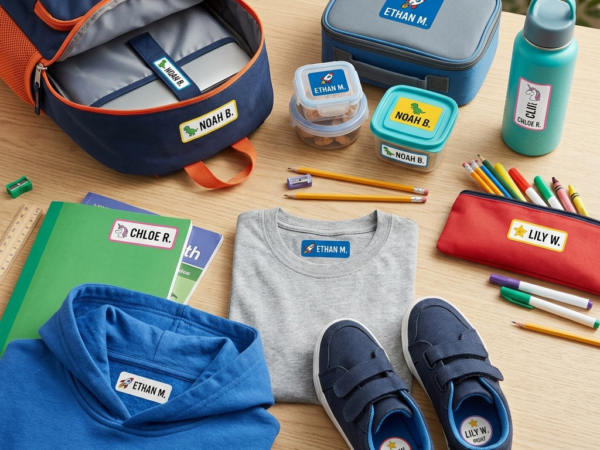
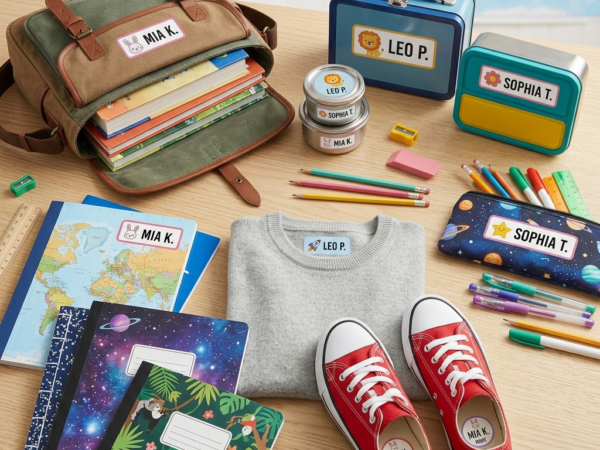
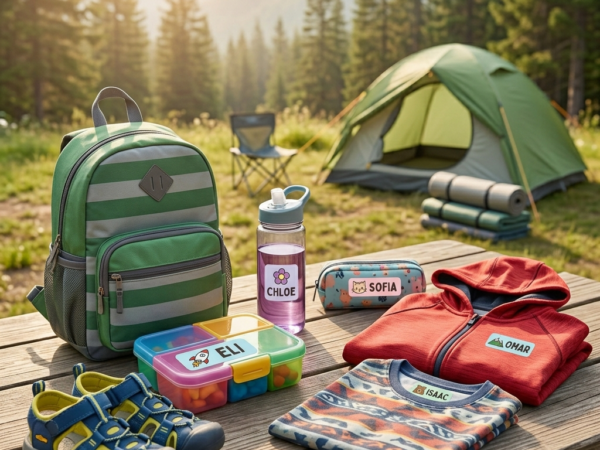
Make belongings personally identifiable. This is where BunnyTagz stickers do their quiet, consistent work. When a child can recognize their water bottle, lunchbox, bag, and shoes at a glance — because their name is right there on a bright, cheerful sticker — they are far more likely to keep track of those things naturally. It removes the confusion. It removes the excuse. It makes ownership visible and personal.
Natural consequences of lectures. A child who loses their lunchbox and has to use a spare learns more from that experience than from any conversation about being more careful.
Praise the effort, not just the outcome. When a child remembers to bring everything home, notice it. Say something. Children repeat behaviors that get acknowledged.
Start earlier than feels necessary. The two-year-old who learns that the bottle with their name sticker is theirs to look after is building the foundation for the ten-year-old who packs their own bag without being asked. These things compound over time in ways that genuinely matter.
Responsibility Is Built, Not Born
No child wakes up one morning suddenly responsible for their belongings. It builds slowly, in small moments, over years.
But it does build — when parents give children the right structures, routines, and tools to practice with.
A name sticker on a water bottle won’t raise a responsible child on its own. But it is a genuinely useful starting point. It makes ownership visible. It makes belongings personal. It gives even the youngest children a clear, simple, physical reason to claim what is theirs.
And that, in our experience at BunnyTagz, is exactly where responsibility begins.
Leave a Reply