If you’re a Canadian parent, you already know this scene. It’s minus 15, the bus is five minutes away, and one mitten is missing.
Not both. Just one. It’s always just one.
Winter gear is the most-lost stuff your child owns. It comes off in a rush, lands in a hallway pile, gets mixed with twenty other black snow pants, and gets left behind at recess. By January, most schools have a lost-and-found bin full of single mittens that nobody can claim.
The good news is that labeling winter gear is simple once you know what goes where. This guide walks you through every item, the best spot for each label, and a quick routine you can finish before the first snowfall.
Why Winter Gear Goes Missing So Easily
Think about a winter morning at school or daycare. Twenty kids take off the same layers at the same time. Toques look alike. Boots look alike. Half the mittens are navy blue.
Without a name, nobody can tell whose is whose. Teachers and daycare staff are busy, and an unlabeled item has no way to find its way home. A name takes a few seconds to read, and that’s often all it takes to get a lost item back in the right cubby.
Winter also adds a few extra problems:
- Lots of pieces. Jacket, snow pants, boots, toque, mittens, neck warmer. That’s six or more items per child.
- Quick changes. Kids go in and out several times a day.
- Wet and messy. Gear gets damp and ends up on heaters and shelves, far from where it started.
- Look-alike colours. Dark colours are popular, so many items look the same.
A clear name on each item fixes most of this.
What to Label: The Full Winter Checklist
Start with the items that go missing most often:
- Mittens or gloves (both of them)
- Toques and hats
- Neck warmers and scarves
- Snow pants
- Winter jackets
- Winter boots
- Indoor shoes (kids switch between boots and shoes all day)
- Spare socks and spare clothes for daycare
- Water bottles and lunch kits
- Backpacks and gym bags
Yes, label both mittens. If only one has a name, the other can still wander off alone.
Where to Put the Label on Each Item
Placement matters as much as the label itself. A label in the wrong spot can peel, rub or get hidden. Here’s what works for each item.
Mittens and Gloves
Put the label on the inside of the cuff, or on the care tag if there is one. Mittens get wet often, so make sure the surface is clean and completely dry before you apply anything.
Toques and Hats
The inner band or the care tag is the best spot. It’s out of sight but easy for a teacher to check in two seconds.
Neck Warmers and Scarves
Use the care tag, or a small spot near the edge on the inside. Skip the part that touches your child’s face, so it stays comfortable.
Jackets and Snow Pants
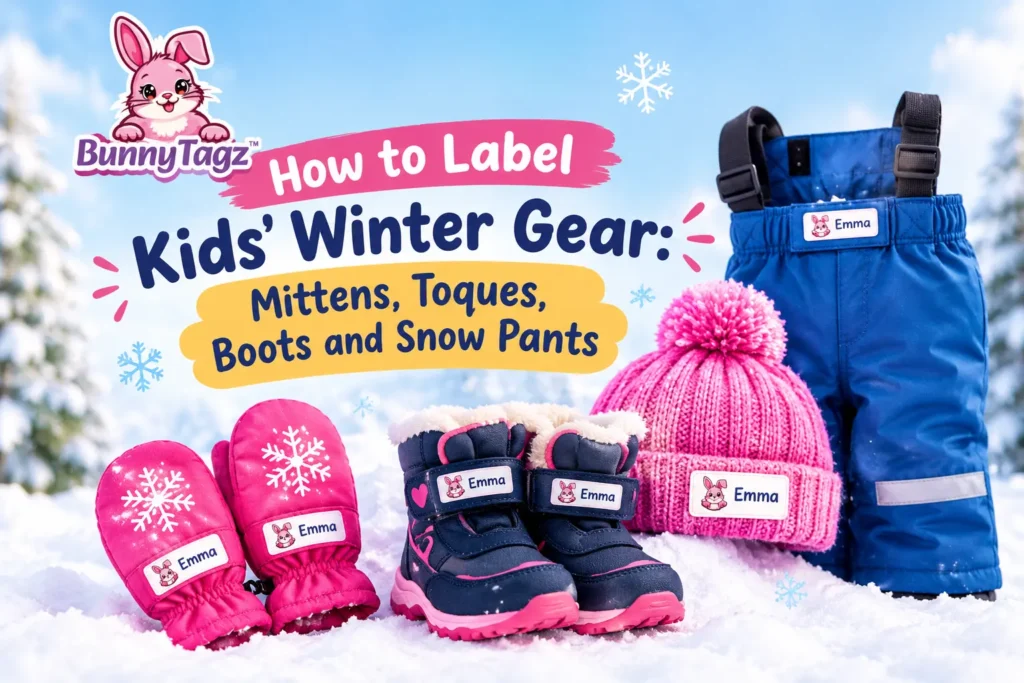
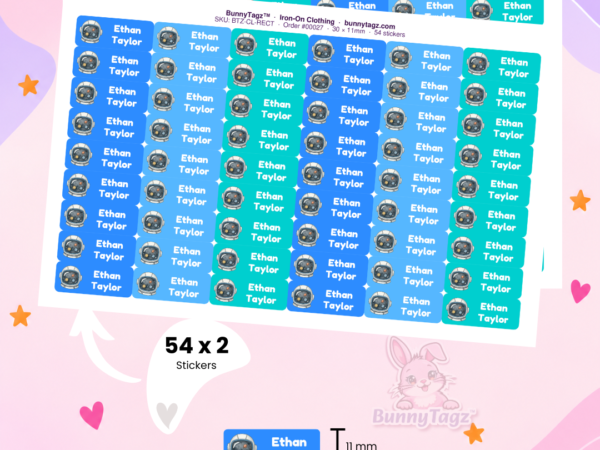
The care tag is usually the easiest place. On snow pants, the inside of the waistband works well. For jackets, you can also use the inside near the collar. BunnyTagz iron-on clothing name labels are made for children’s clothing such as jackets, sweaters and uniforms, so they’re a natural fit for this job.
Winter Boots
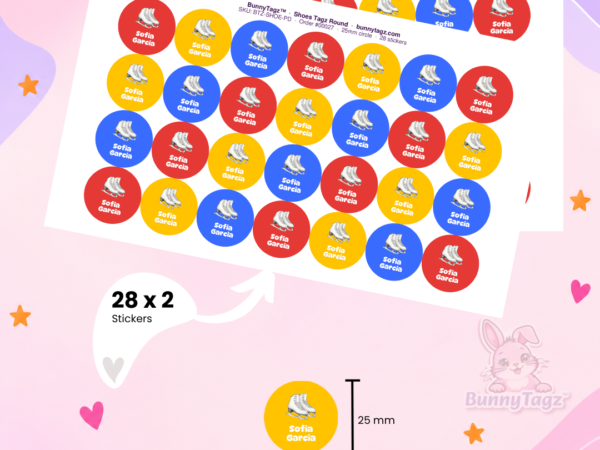
Stick a shoe name label inside the boot, near the tongue or on the inner side where it won’t rub against your child’s foot. Dry the surface first, because boots are often damp. You can see the options in our Shoes Tagz collection.
Water Bottles, Lunch Kits and Containers
Winter doesn’t make these any less lost. Use waterproof stick-on labels on smooth, hard surfaces. Our waterproof mini rectangle name labels are made for exactly this kind of everyday use. For more detail, read our guide on how to label a school lunch box so the label lasts.
Backpacks and Bags
Place the label on the inside, or near a zipper area. For a full walkthrough, see our parent’s guide to labeling everything your kid owns.
Iron-On or Stick-On for Winter Clothes?
Short answer: it depends on the item.
Iron-on labels suit fabrics that can take heat, like jackets, sweaters and many snow pants. They stay in place on clothing, which makes them handy for items that get pulled on and off all day. If you want to know more about how permanent they are, read Can Iron-On Name Labels Be Removed?
Stick-on labels are better for hard surfaces such as water bottles, lunch boxes and thermoses, or when you don’t want to use heat.
Labeling daycare spare clothes? Our comparison of iron-on vs stick-on clothing labels for daycare explains which one fits which item.
A Quick Word of Caution About Heat
Before you use an iron-on label on any winter item, check the care label. Some snow gear and waterproof fabrics don’t handle a hot iron well, and too much heat can damage the fabric.
If you aren’t sure:
- Read the care tag for heat limits.
- Test on a hidden spot, like the inside hem.
- Or place the label on the care tag instead of the outer fabric.
- Always follow the instructions that come with your labels.
When in doubt, go with the care tag. It’s the safest spot on most items.
A 10-Minute Labeling Routine Before Winter Hits
You don’t need a whole weekend. Try this:
- Gather everything into one pile: jackets, snow pants, mittens, toques, boots, neck warmers.
- Check the care tags and decide where each label will go.
- Label as you go. Don’t leave a “later” pile. It will still be there in March.
- Label the spares. Backup mittens and extra socks go missing too.
- Keep a few extra labels near the door for new items, like a replacement toque.
Doing this before the first snowfall means you won’t be doing it in a panic on a freezing morning.
Smart Tips That Make Labeling Easier
Use one name style for everything. When teachers see the same label on every item, they learn to spot it fast.
Colour-code siblings. Give each child a different colour, so one quick glance tells you whose jacket is whose.
Add the first and last name. A first name alone can match another child. Using both avoids mix-ups, especially in busy classrooms.
Check labels mid-winter. Gear gets heavy use. A quick check in January lets you replace any label that has worn or lifted.
Label as soon as you buy. New gear is easiest to label before it ever leaves the house.
Common Mistakes to Avoid
- Labeling only one mitten. Do both, every time.
- Applying labels to wet surfaces. Dry first, or the label won’t hold well.
- Putting a label where the foot or skin presses. It will rub and feel uncomfortable.
- Skipping the care label check. Heat can harm some fabrics.
- Forgetting the small stuff. Neck warmers, spare socks and hair accessories are lost just as often.
- Leaving it too late. The best time to label is before the first cold morning.
For water bottles, snack containers and anything else that gets washed, use waterproof name labels. They are dishwasher-safe and microwave-safe. For mitts, hats and snow pants, see our iron-on clothing labels.
Ready for Winter? Let’s Make It Easy
Winter is long in Canada, and kids have a lot of gear. A few minutes of labeling now saves a lot of searching later.
BunnyTagz makes personalized name labels for kids, designed in Calgary and shipped free across Canada. Choose the style that fits your child’s winter wardrobe:
- Kids Iron-On Clothing Name Labels for jackets, snow pants and sweaters
- Shoes Tagz for winter boots and indoor shoes
- Clothing Tagz to browse every clothing option
Smart Choice Combos if you want one pack that covers more items
Leave a Reply