
There’s a moment most school parents know well. It’s 10:47 PM. The lunches are packed. The permission slip you almost forgot is signed. The water bottle has been found (it was under the couch, obviously). You’ve mentally run through tomorrow’s schedule three times. And yet somehow, you still don’t feel ready.
Nobody warned you about this part of parenting.
Not the big stuff — everyone warns you about the big stuff. They tell you about sleepless nights with newborns and the emotional rollercoaster of the teenage years. But this? This constant, humming background noise of school life that never fully switches off? This is what parents are only now starting to name: the invisible load.
What Exactly Is the Invisible Load?
The invisible load is everything you carry that nobody sees.
It’s not just packing the school bag — it’s remembering to pack the school bag. It’s tracking which day is library day, which day requires an extra snack, and which week the class is doing show-and-tell. It’s noticeable that your child’s shoes are getting too tight before they start complaining. It’s knowing that the red lunchbox is theirs and the blue one belongs to their classmate, because they keep coming home with the wrong one.
It’s the mental filing cabinet that never closes.
Mothers carry the bulk of this — research consistently shows this — but dads, single parents, and grandparent caregivers feel it too. And what makes it genuinely exhausting isn’t any single task. It’s the relentlessness. The fact that the moment you tick one thing off, three more appear in its place.
The school years don’t reduce this load. If anything, they multiply it. Suddenly, you’re not just managing a toddler’s daily needs — you’re managing school schedules, extracurriculars, social dynamics, lost belongings, uniform requirements, and the creeping anxiety that you’ve forgotten something important.
Why “Just Organize Better” Isn’t the Answer
When parents talk about the invisible load, well-meaning people often respond with suggestions. Get a family calendar. Use an app. Make a checklist.
And sure — systems help. But advice like this misses something important: the invisible load isn’t really about organization. It’s about awareness. It’s the cognitive work of noticing what needs to happen before anyone else has even thought about it.
No app reminds you that your child’s jacket doesn’t have their name in it and will probably end up in the school lost and found by Wednesday. No calendar tells you that three other kids in the class have identical water bottles, and yours keeps coming home empty because nobody knows which one belongs to whom.
The invisible load lives in the details. And the only way to actually lighten it — not just manage it, but genuinely reduce it — is to take some of those recurring mental tasks and make them disappear permanently.
That’s a different thing entirely from organizing better. It’s about eliminating the need to think about certain things at all.
Small Habits That Actually Make a Difference
Here’s the truth: you’re not going to eliminate the invisible load. It comes with the territory of caring deeply about your child’s daily life. But you can absolutely shrink it. And the habits that help most aren’t the complicated ones.
- Do the Sunday Reset
Ten minutes on Sunday evening changes the entire week. Check the school bag. Restock the snack. Confirm the schedule. It sounds obvious, but most parents do this reactively — on Tuesday morning when something is already missing. Moving it to Sunday turns a stressful scramble into a calm routine.
- Name everything. Seriously, everything.
This one sounds small. It isn’t. The number of mental calories burned on lost items, mix-ups, and missing gear is staggering when you add it up across a school year. A labeled water bottle comes home. An unlabelled one joins the pile in the school lost-and-found, and you spend three days wondering where it went.
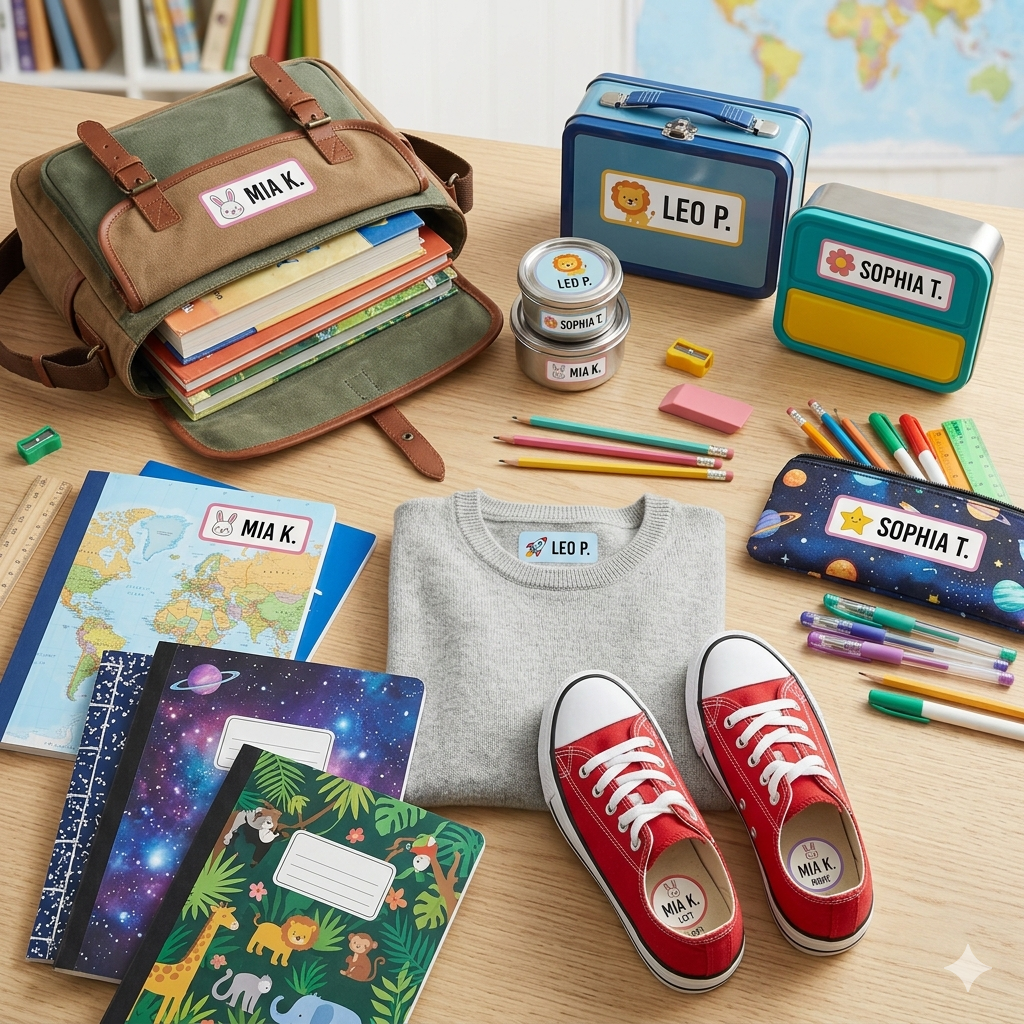
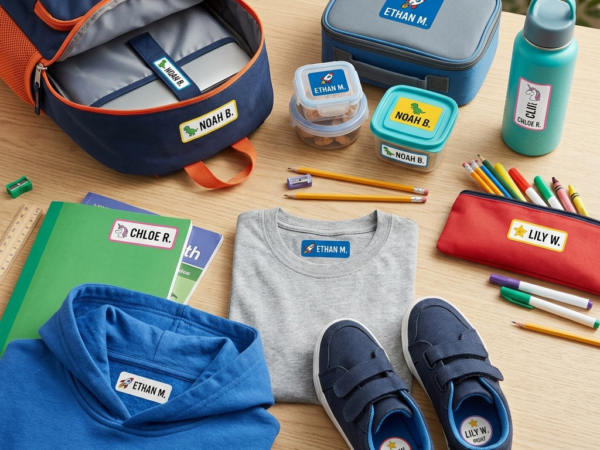
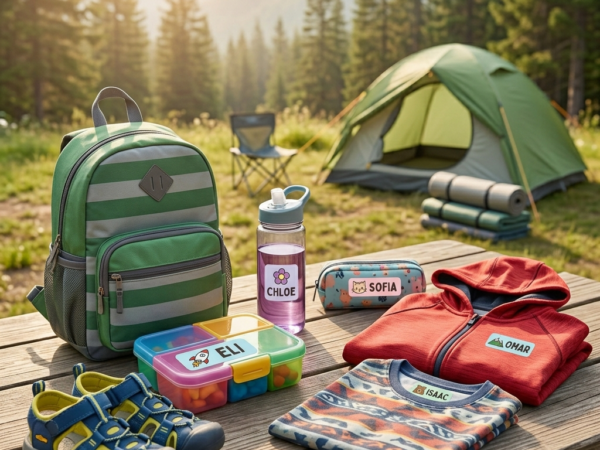
At BunnyTagz, we hear this from parents constantly — the moment they label their child’s things properly, a whole category of stress just quietly disappears. Not dramatically. Not overnight. But slowly, those “where is your jacket?” and “someone took the wrong lunchbox again” conversations just stop happening. Cute, waterproof name tags on bottles, lunchboxes, clothing, and shoes aren’t glamorous. But they quietly remove an entire thread of the invisible load that you didn’t even realize you were carrying.
- Let your child own one part of the routine
Even a four-year-old can put their shoes by the door. Even a six-year-old can check that their water bottle is in the bag. The goal isn’t to hand over responsibility prematurely — it’s to build the habit early so that by age eight, they’re genuinely doing it without being asked. Every task your child takes genuine ownership of is one less thing living in your head.
- Create a “launch spot.”
One designated place near the door — a hook, a basket, a shelf — where tomorrow’s things live tonight. Bag, shoes, jacket. Done. The launch spot doesn’t require discipline or willpower. It just requires consistency for about two weeks, and then it becomes automatic. Parents who swear by this say it eliminates more morning panic than anything else they’ve tried.
- Stop trying to remember. Start trying to remove.
The invisible load grows when we try to hold more in our heads. It shrinks when we find ways to make things so that they do not need to be remembered at all. A label means you don’t have to remember whose bottle is whose. A hook means you don’t have to remember where the bag is. A Sunday reset means you don’t have to remember mid-Wednesday that something was missing.
The goal isn’t a perfect system. It’s a lighter head.
You are Doing More Than Anyone Sees
If you’re reading this and nodding — maybe a little tired, maybe a little relieved that someone finally named this thing — then you already know how real this is.
The invisible load of being a school parent is genuine work. It doesn’t show up on any to-do list. Nobody thanks you for remembering the library book or noticing the lunchbox situation before it became a problem. But it matters. Enormously.
So yes — build your systems. Do your Sunday reset. Label the things. Create your launch spot. Not because it makes you a more organized parent, but because you deserve to carry a little less. And your kids deserve a parent who isn’t running on empty by Tuesday.
Small habits won’t fix everything. But the right ones? They free up just enough space in your head to actually enjoy this season — messy, chaotic, wonderful school years and all.
BunnyTagz makes waterproof, customizable name tags for kids’ school essentials — built to survive lunchboxes, laundry, and everything in between because one less thing to worry about is always worth it.
Leave a Reply